All three adaptations of these classic novels fall prey to the usual pitfalls involved in such a process. The bare outlines of the plots are provided, but character development, a true sense of place and time with regard to setting, and masterful description of the action all go by the wayside. Jungle Book is mistitled as it references only the Mowgli stories and moves from incident to incident so quickly that the “law of the jungle” morals in Kipling’s anthropomorphic fables are lost. Treasure Island is written in a similar breakneck, choppy style, and Long John Silver, one of the most memorable characters ever created, is eminently forgettable in this telling. In 80 Days , the historic events that made such a journey even thinkable, like the opening of the Suez Canal and the completion of the Transcontinental Railroad, are never mentioned, nor is the International Date Line, which enabled Fogg to win his wager, mentioned, let alone explained. The cartoon illustrations in all three volumes border on offensive as no matter which country or culture is depicted, the dot-eyed faces are virtually identical except for minor variations in skin tone. Some illustrations make no sense, as when the action in 80 Days describes the servant Passepartout at the bottom of a circus pyramid, but the picture is of a Japanese tearoom.
Ficha técnica
Editorial: House of Stratus
ISBN: 9781842329436
Idioma: Inglés
Número de páginas: 154
Tiempo de lectura:
3h 7m
Encuadernación: Tapa blanda
Fecha de lanzamiento: 26/03/2004
Año de edición: 2002
Plaza de edición: Thirsk (Inglaterra)
Especificaciones del producto
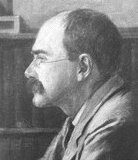
Escrito por Rudyard Kipling
(Bombay, 1865 - Londres, 1936) escribió relatos, ensayos, novelas y poesía. Iniciado en la masonería a los veinte años, en la logia Esperanza y Perseverancia nº 782 de Lahore, Punyab, India, su literatura abarca todos los territorios y géneros, pero principalmente en sus primeros años arroja luz sobre la colonización inglesa de la India. Rechazó el Premio Nacional de Poesía y en tres ocasiones la Orden del Mérito del Reino Unido, que conlleva el título de Sir, lo que contradice su supuesto imperialismo colonial. Aceptó, sin embargo, el Premio Nobel en 1907. Entre sus obras aparecen libros de relatos como "Por el bien de la humanidad", "El hándicap de la vida" (1891) y las novelas "La luz que se apaga" (1891), "Capitanes intrépidos" (1896) y "Kim" (1901). Su autobiografía, "Algo de mí mismo" (1937), se publicó un año después de su muerte.