






















leer_primeras_paginas Leer primeras páginas

📱 eBook en inglés THE EGO AND THE ID

(An Introduction & Sigmund Freud Biography Added)

E-Kitap Projesi & Cheapest Books- 9786057566799

Filosofía Historia de la filosofía

Sinopsis de THE EGO AND THE ID

In his later work, Freud proposed that the human psyche could be divided into three parts: Id, ego and super-ego. Freud discussed this model in the 1920 essay Beyond the Pleasure Principle, and fully elaborated upon it in The Ego and the Id (1923), in which he developed it as an alternative to his previous topographic schema (i.e., conscious, unconscious and preconscious). The id is the completely unconscious, impulsive, childlike portion of the psyche that operates on the "pleasure principle" and is the source of basic impulses and drives; it seeks immediate pleasure and gratification. Freud acknowledged that his use of the term Id (das Es, "the It") derives from the writings of Georg Groddeck. The super-ego is the moral component of the psyche, which takes into account no special circumstances in which the morally right thing may not be right for a given situation. The rational ego attempts to exact a balance between the impractical hedonism of the id and the equally impractical moralism of the super-ego; it is the part of the psyche that is usually reflected most directly in a persons actions. When overburdened or threatened by its tasks, it may employ defense mechanisms including denial repression, undoing, rationalization, repression, and displacement. This concept is usually represented by the "Iceberg Model". This model represents the roles the Id, Ego, and Super Ego play in relation to conscious and unconscious thought. Freud compared the relationship between the ego and the id to that between a charioteer and his horses: the horses provide the energy and drive, while the charioteer provides direction.

App gratuita de lectura Vivlio Casa del Libro

Ahora tu lectura es multidispositivo, con la App Vivlio Casa del Libro, puedes tener todos tus libros en tu tablet y smartphone. Aprovecha cualquier momento para seguir disfrutando de las lecturas que más te gustan.

Ver más

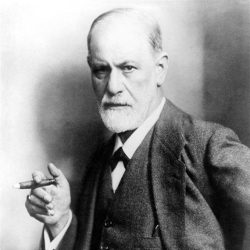
Escrito por Sigmund Freud


Sigmund Freud
Sigmund Freud (6 de mayo de 1856, en Příbor, Moravia, Imperio austriaco (actualmente República checa)-23 de septiembre de 1939, en Londres) fue un médico neurólogo austriaco de origen judío, padre del psicoanálisis y una de las mayores figuras intelectuales del siglo XX. A principios del siglo (1900), publicó La interpretación de los sueños, extensísimo libro donde Freud desarrollaba una tesis fundamental: los sueños no sólo son un producto psíquico desechable, como se creía hasta el momento, sino que representan un trabajo psíquico normal lleno de sentido. Sus grandes contribuciones al diagnóstico del estado de nuestra cultura son: El porvenir de una ilusión (1927), El malestar en la cultura (1930), Moisés y la religión monoteísta (1939). Ya con anterioridad, a través de obras entre las que destaca Tótem y tabú (1913), inspirada en el evolucionismo biológico de Darwin y el evolucionismo social de Frazer, había dado testimonio de hasta qué punto consideró que la importancia primordial del psicoanálisis, más allá de una eficacia terapéutica que siempre juzgó restringida, residía en su condición de instrumento para investigar los factores determinantes en el pensamiento y el comportamiento de los hombres.
Descubre más sobre Sigmund Freud
Recibe novedades de Sigmund Freud directamente en tu email

Ficha técnica


Editorial: E-kitap Projesi & Cheapest Books

ISBN: 9786057566799

Idioma: Inglés

Fecha de lanzamiento: 08/11/2024

Especificaciones del producto


Opiniones sobre THE EGO AND THE ID (EBOOK)


¡Sólo por opinar entras en el sorteo mensual de tres tarjetas regalo valoradas en 20€*!

Léelo en cualquier dispositivo


Los eBooks más vendidos de la semana