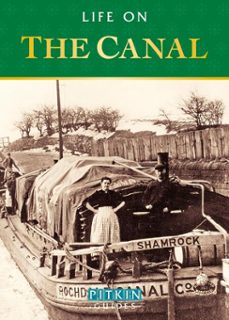
For centuries it was far more efficient to move goods by water than by road. The end of the 18th century saw 2,000 miles of canal built in Britain: the Canal Age had begun.Constructing the canals consisted of a great deal of hard work and manual labour, headlines by individual names but mostly done by tens of thousands of men across Britain called navvies. Initially much like carting on roads, boating on canals grew as canal systems expanded across the country, but still required long hours, hard work and specific skills.This detailed and informative guide tells the story of the boats and their workers. From the professional leggers who walked boats through tunnels to lock keepers to canal children running ahead of the boats, original photographs and artefacts such as tug tickets and timetables show what life was like on the canal.A classic Pitkin guide to immerse readers in the world of canals in Britain, including a list of museums and heritage centres to provide further insight into the history of the canal network.
At the outbreak of World War Two, the Bank of England was shipping gold to America to purchase arms and munitions. In June 1940, RMS Niagara was secretly carrying 8 tons of British gold when it hit a German mine and sank off New Zealand. The Royal Navy declared salvage was impossible because the water was too deep, so the desperate Bank of England offered the job to a retired sea captain, John Williams. Within weeks, Williams hired a deep-sea diver, built an experimental diving bell, employed a team of misfits, and refloated a rusting hulk to use as a salvage ship. Then, against orders, Williams sailed into the minefield to search for the sunken liner. Over the coming months, the crew battled bureaucracy, storms, German mines, and each other, as they dove to record depths. But the closer they got to the gold, the more they realised they would be betrayed by the people who sent them on their mission. With exclusive access to diaries, reports, logbooks, correspondence and interviews, Jeff Maynard tells a story of underdogs overcoming insurmountable odds, and the people of a small coastal community who welcomed them, revealing the truth behind one of the most incredible adventures of the Second World War.
I feel you have captured the essence of my Great Aunt Helen. Howard Ostby, descendant of Titanic survivor Helen OstbyThe early 1900s were a mans world, and the Titanic was no exception. Even today, the stories we know about that fateful night mostly revolve around men and their actions, despite there having been nearly 500 women and girls on board.From the stewardess who survived three different maritime disasters to the mother whose young children were kidnapped and taken aboard the Titanic, and from the Carpathia passenger whose reports on the Titanic started a journalism career to the woman who went down with the ship but who no one remembered seeing, Melinda E. Ratchford tells the stories of women whose lives were inextricably linked to the sinking, revealing the world as it was for women in 1912.Titanic Womens Stories is an investigation into the lives of these women before, during and after the tragedy that irrevocably changed both their world and ours.