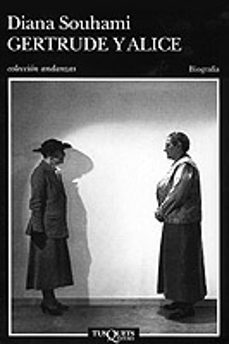
Diana Souhami trabajaba en una editorial hasta que se dio a conocer en Inglaterra, su país de origen, gracias a sus obras de teatro para televisión y radio, algunas de las cuales también han sido representadas en teatros de Londres, Edimburgo y Bristol. Ha publicado cuentos y críticas literarias y teatrales en revistas como New Statesman. En 1988 sacó a la luz Gluck: her Biography mientras reunía el material para Gertrude y Alice (Andanzas 199), documentadísima y espléndida biografía de la relación entre la escritora norteamericana Gertrude Stein y su célebre amiga íntima, Alice B. Toklas.
Recibe novedades de DIANA SOUHAMI directamente en tu email
The story of the tempestuous romance between screen goddess Greta Garbo and society photographer Cecil Beaton--two enigmatic and iconic legends of the 30s. Best-selling author Souhami has drawn on diaries, letters, photographs, and films to show they both infused their work with the allure of androgyny--while concealing it in their private lives. A beautiful picture of two remarkable individuals and their era. "Compelling reading."--Literary Review. ..."fascinating insight..."--Elle.
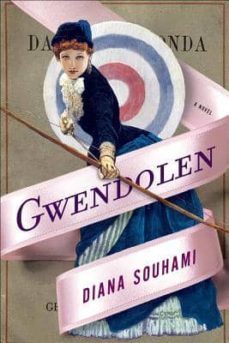
"A bold feat of imagination . . . . Intriguing and moving: a fictional recovery of the woman's interior experience . . . and a powerful meditation upon the nature of creativity. Both an arresting interpretation of George Eliot's work and a compelling fiction in its own right." --Rebecca Mead, author of "My Life in Middlemarch"In an astonishing unsent love letter, a 19th-century Englishwoman looks back at her formative years, when she fell in love with one man but married another--the richest bidder--to save her familyGwendolen Harleth, an exceptionally beautiful upper-class Englishwoman, is gambling boldly at a resort when she catches the eye of a handsome, pensive gentleman. His gaze unnerves her, and she loses her winnings. The next day, she learns that her widowed mother and younger sisters, for whom she is financially responsible, have lost their family's fortune. As a young woman in the 1860s with only her looks to serve her, Gwendolen's options are few, so when Henleigh Grandcourt, a wealthy aristocrat, proposes to her, she accepts, despite her discovery of an alarming secret about his past.During their marriage, Grandcourt is psychologically and physically brutal to her, shattering her confidence. Gwendolen begins to encounter the alluring gentleman from the resort--Daniel Deronda--in her social circles, but Grandcourt, cold and calculating, takes pains to isolate her from everything she loves. Gwendolen's desperation nearly overcomes her, until an unexpected turn of events suddenly liberates her from Grandcourt's tyranny and leaves her financially independent. Newly free, but riddled with insecurity and desire, Gwendolen must take painful steps to shape a life that has not gone according to plan.Gwendolen and her world, originally creations of George Eliot, are inhabited and brought to sympathetic and nuanced life in this irresistible debut novel by Diana Souhami, an award-winning British biographer.
Gertrude Stein and Alice B. Tokas were the talk of pre-war Paris. Photographed by Cecil Beaton and Man Ray, painted by Picasso and written about by Hemingway, they were at the heart of Parisian cultural and literary life. Alice, convinced that Gertrude was a genius, cooked for her, typed her manuscripts and fought to obtain the fame she was convinced Gertrude was due. Alice said Gertrude was the happiest person she had ever known, and was besotted with her for the many years they were together. They were indomitable, charismatic, and wildly eccentric, driving around in 'Auntie', their Ford, with Basket, their cherished poodle. Using letters, memoirs and the published writings of Gertrude and Alice, Diana Souhami has written a brilliant and witty chronicle of one of the happiest marriages in modern literary history.
La ya legendaria escritora norteamericana Gertrude Stein conoció a Alice B. Toklas en París, en el año 1907. A partir de ese día vivieron juntas hasta la muerte de Gertrude en 1946. Treinta y nueve años de convivencia durante los cuales jamas durmieron bajo distinto techo, o viajaron solas, o se divirtieron por separado. Esto tal vez no tendria mayor relevancia si Gertrude Stein no fuera quien fuera y si, durante cuatro decadas, Gertrude y Alice no hubieran sido el centro de toda la actividad cultural parisina en un periodo de la historia europea que va desde la epoca efervescente de las grandes rupturas vanguardistas hasta los locos años veinte y treinta, pasando por la conmocion de dos guerras mundiales. Diana Souhami reconstruye no solo la insolita historia personal de uno de los matrimonios mas solidos de nuestro siglo, sino que aporta anecdotas y hechos ineditos en torno a la atribulada vida artistica, literaria y mundana de la primera mitad de nuestro siglo.
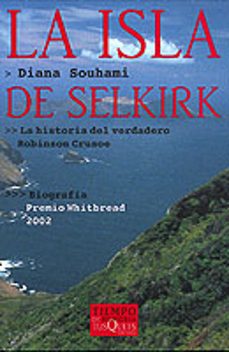
Si nos preguntaran quién es Alejandro Selkirk, pocos podríamos responder. En cambio, casi todos sabemos quién es Robinson Crusoe, el náufrago de ficción creado por el escritor británico Daniel Defoe hace tres siglos, inspirandose precisamente en la azarosa vida del marino escoces que termino por dar su nombre a la pequeña isla del Pacifico, donde fue abandonado en 1704 por sus compañeros corsarios tras un amago de motin, y donde se vio forzado a sobrevivir durante cuatro años. Diana Souhami, en esta biografia que acaba de ganar el Premio Whitbread 2002, traslada al lector a las islas de Alejandro Selkirk y Robinson Crusoe, que forman el archipielago Juan Fernandez, en el oceano Pacifico oriental, a 34º de latitud sur y a unos setecientos kilometros de la costa de Chile. La vida de Selkirk, hombre de familia humilde, que fue a parar a un Londres portuario, repleto de bucaneros, sinverguenzas y empresarios sin escrupulos, permite a Souhami emprender este magnifico relato de las expediciones piratas que cruzaban todos los mares a finales del siglo xvii en medio de guerras, rivalidades y escaramuzas de toda suerte. El contraste de ese ambiente canallesco con el paraiso natural de la isla de Selkirk es el trasfondo en el que se inscribe este aspecto poco conocido de la historia. Selkirk fue rescatado por un barco pirata y, de regreso a Londres, escribio el libro que permitio a Defoe conocer de primera mano al protagonista real de la historia de su genial Robinson Crusoe de ficcion.