
Imprescindibles



Ficción

No Ficción
Ciencias y tecnología Biología Ciencias Ciencias naturales Divulgación científica Informática Ingeniería Matemáticas Medicina Salud y dietas Filología Biblioteconomía Estudios filológicos Estudios lingüísticos Estudios literarios Historia y crítica de la Literatura
Humanidades Autoayuda y espiritualidad Ciencias humanas Derecho Economía y Empresa Psicología y Pedagogía Filosofía Sociología Historia Arqueología Biografías Historia de España Historia Universal Historia por países



Infantil




Juvenil
#Jóvenes lectores Narrativa juvenil Clásicos adaptados Libros Wattpad Libros Booktok Libros de influencers Libros de Youtubers Libros Spicy Juveniles Libros LGTBIQ+ Temas sociales Libros ciencia ficción Libros de acción y aventura Cómic y manga juvenil Cómic juvenil Manga Shonen Manga Shojo Autores destacados Jennifer L. Armentrout Eloy Moreno Nerea Llanes Hannah Nicole Maehrer
Libros de fantasía Cozy Fantasy Dark academia Hadas y Fae Romantasy Royal Fantasy Urban Fantasy Vampiros y hombres lobo Otros Misterio y terror Cozy mistery Policiaca Spooky Terror Thriller y suspense Otros
Libros románticos y de amor Dark Romance Clean Romance Cowboy Romance Mafia y amor Romance dramatico Romcom libros Sport Romance Otros Clichés Enemies to Lovers Friends to Lovers Hermanastros Slow Burn Fake Dating Triángulo amoroso

Cómic y manga
Novela gráfica Novela gráfica americana Novela gráfica europea Novela gráfica de otros países Personajes, series y sagas Series y sagas Star Wars Superhéroes Cómics DC Cómics Marvel Cómics otros superhéroes Cómics Valiant




Books in English 
The Secrets Of Secrets
A thrilling and long-awaited new novel from Dan Brown



eBooks
Literatura Contemporánea Narrativa fantástica Novela de ciencia ficción Novela de terror Novela histórica Novela negra Novela romántica y erótica Juvenil Más de 13 años Más de 15 años Infantil eBooks infantiles
Humanidades Autoayuda y espiritualidad Ciencias humanas Economía y Empresa Psicología y Pedagogía Filosofía Historia Historia de España Historia Universal Arte Cine Música Historia del arte
Ciencia y tecnología Ciencias naturales Divulgación científica Medicina Salud y dietas Filología Estudios lingüísticos Estudios literarios Historia y crítica de la Literatura Estilo de vida Cocina Guías de viaje Ocio y deportes



RICHARD GRIFFITHS
Recibe novedades de RICHARD GRIFFITHS directamente en tu email
Filtros
Del 1 al 3 de 3

Faber & Faber 9780571279098
Marshal Philippe Pétain was, in the words of historian Andrew Roberts, the most controversial Frenchman of the twentieth century. A truly distinguished soldier who rose from humble origins, he commanded French forces at Verdun in 1916 and became a national hero. But though by 1940 he had become French Deputy Prime Minister his political abilities were meagre. And after France fell to the Nazis it was Petain who signed the armistice and, from the spa town of Vichy, ruled over the Etat Francais Hitler had left him. Richard Griffiths tells this sorry story in outstanding detail, all the way to Petains ignominious end, and not stinting to show his culpability in the Vichy persecution of French Jews and its suppression of the internal Resistance.Petain, utterly obscure until the age of 58, was hurled to fame by his defence of Verdun in 1916. This saved his countrys bacon (he would say her honour) at a crisis point of the Great War. Thereafter he became an almost monarchical figure, more revered than any living Frenchman, even after the disaster of 1940. But then, as head of the puppet Vichy government, he slid into ignominy after failing to square honour with military humiliation. Griffithss durable biography... paints not a devil but a courageous, misguided man with a hole where others keep their political acumen. Robin Blake, Independent
Ver más
eBook

Faber & Faber 9780571310142
When reviewing the first edition in the Times Literary Supplement, Stephen Koss wrote that Fellow Travellers of the Rightshould be required reading for those who believe that ignorance under any circumstances can deter evil. One can see why. So topsy-turvy had attitudes become in certain circles that the accusation of being unquestionably the biggest war-monger in the world today was levelled at Churchill, not Hitler! In the authors words this book is an attempt to study the various forms of motivation which led to this phenomenon (pro-Nazi sympathies in Britain). It is also an attempt to assess the years in which approval for Nazi Germany became greater or less, and the possible reasons for these changes. The author goes on to say, The pattern of British pro-Nazism is at first sight surprising. After a slow start in the 1933-35 period, it reached a high peak in the years 1936 and 1937, after which it gradually declined until, at the outbreak of the war, it was confined to extremist groups and isolated outcrops of specially motivated approval. From misguided writers like Edmund Blunden and Henry Williamson to altogether more sinister figures like Lord Londonderry and Sir Arnold Wilson, the roll-call of fellow travellers of the Right is disturbing. Richard Griffiths acclaimed and much-sought-after book remains the best on the subject.
Ver más
eBook
Faber & Faber 9780571310456
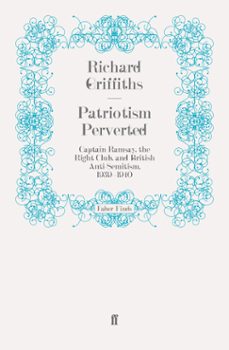
Patriotism Perverted is an exploration of British anti-Semitism in the last six months of peace and the first year of the Second World War. It shows how, against the backdrop of an endemic British social anti-Semitism, a virulent form of this tendency was able to emerge in the late Thirties in a variety of extremist movements. These movements gained their strength from the popular obsessions, in 1939, with Jewish responsibility for the approaching war (seen as The War of the Jews Revenge), and with the myth of the Judaeo-Bolshevik Plot. In many cases, these views were closely related with pro-Nazism and were often held by the most patriotic of people. For most, the outbreak of war was a signal to perform their patriotic duty. But there were others who found themselves in a considerable dilemma, torn between patriotism and their desire to subvert a war they believed Britain to have been tricked into undertaking. Researching many prominent figures of the day, including Captain Ramsay and Sir Oswald Mosley, Patriotism Perverted offers a fascinating insight into the views and activities of those in the various anti-Semitic and/or pro-Nazi circles in 1939.
Ver más
eBook
Del 1 al 3 de 3