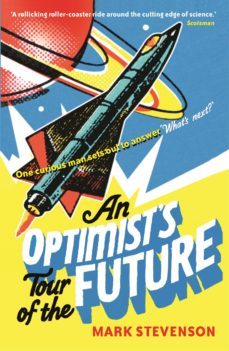
Mark Stevenson has been to the future a few years ahead of the rest of us - and reckons it has a lot going for it. His voyage of discovery takes him to Oxford to meet Transhumanists (they intend to live forever), to Boston where he confronts a robot with mood swings, to an underwater cabinet meeting in the Indian Ocean, and Australia to question the Outbacks smartest farmer. He clambers around space planes in the Mojave desert, gets to grips with the potential of nanotechnology, delves deep into the possibilities of biotech, sees an energy renaissance on a printer, a revolution in communications, has his genome profiled, and glimpses the next stage of human evolution ... and tries to make sense of whats in store.Insightful and often very funny, An Optimists Tour of the Future is a book that tracks one curious mans journey to find out whats in store.
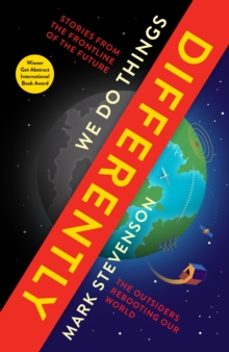
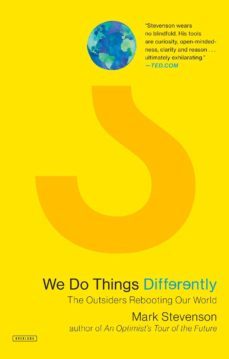
Our systems are failing. Old modelsfor education, healthcare and government, food production, energy supplyare creaking under the weight of modern challenges. As the worlds population heads towards 10 billion, its clear we need new approaches. In We Do Things Differently, historian and futurologist Mark Stevenson sets out to find them, across four continents. From Brazilian favelas to high tech Boston, from rural India to a shed inventor in Englands home counties,AMark Stevenson travels the world to find the advance guard re-imagining our future. At each stop, he meets innovators who have already succeeded in challenging the status quo, pioneering new ways to make our world more sustainable, equitable and humane. Populated by extraordinary charactersincluding Detroit citizens who created new jobs and promoted healthy eating by building greenhouses, an Austrian mayor who built a new biomass plant using the by-product of a local flooring company, and an Indian doctor who crowdsourced his research and published his findings onlineWe Do Things DifferentlyApaints a riveting picture of what can be done to address the worlds most pressing dilemmas, offering a much needed dose of down-to-earth optimism. It is a window on (and a roadmap to) a different and better future.
Our systems are failing Old models for education healthcare and government food production energy supply are creaking under the weight of modern challenges As the world s population heads towards 10 billion it s clear we need new approaches Futurologist Mark Stevenson sets out to find them across four continents From Brazilian favelas to high tech Boston from rural India to a shed inventor in England s home counties We Do Things Differently travels the world to find the advance guard re imagining our future At each stop he meets innovators who have already succeeded in challenging the status quo pioneering new ways to make our world more sustainable equitable and humane Populated by extraordinary characters We Do Things Differently paints an enthralling picture of what can be done to address the world s most pressing dilemmas offering a much needed dose of down to earth optimism It is a window on and a roadmap to a different and better future
In the early days of video gaming, the connection between the player and the digital world was strictly limited to sight and sound. When your character took a hit, you saw a flashing sprite and heard a digitized beep, but your hands remained completely disconnected from the action. That all changed in the late 1990s with the introduction of a bulky, battery-powered accessory that plugged into the back of a controller. The introduction of force feedback did not just add a gimmick; it fundamentally altered the psychological landscape of interactive entertainment.This captivating tech history traces the evolution of haptic feedback from the clunky arcade steering wheels of the 1980s to the hyper-precise, micro-actuated controllers of modern consoles. The author uncovers the fierce patent wars, the engineering miracles, and the legal battles that defined the race to make players physically feel the game. You will explore the neuroscience behind why a perfectly timed vibration makes a virtual explosion feel devastatingly real, and how developers learned to use physical sensation to communicate invisible game mechanics.Packed with nostalgic anecdotes and deep technical insights, this book explores the unsung heroes of gaming hardware. Discover the incredible journey of how the simple rumble motor transformed video games from flat visual experiences into deeply visceral, tactile adventures.
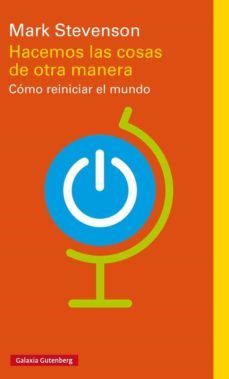
Nuestros sistemas están fallando. Los actuales modelos educativos, sanitarios, gubernativos, alimentarios y energéticos crujen bajo el peso de los nuevos desafíos. Está claro que necesitamos nuevos enfoques, y en este libro Mark Stevenson emprende un viaje a traves de cuatro continentes para buscarlos. Encuentra gente que no solo piensa, sino que ademas actua de forma diferente y, a pesar de la resistencia de aquellos que se benefician del statu quo, pone sobre la mesa valientes alternativas de futuro. Hay un ingeniero de Boston que dejo su trabajo para encontrar una cura para la enfermedad genetica de su hermano y ha acabado inventando una red sanitaria llevada por los propios pacientes. Hay un matematico indio que esta revolucionando la investigacion de nuevas medicinas para la tuberculosis. Hay una cientifica agraria que encuentra soluciones en la India a los problemas que conlleva la Revolucion Verde a traves de un sistema que consigue altisimos rendimientos en el cultivo de arroz. Hay un alcalde austriaco que, contando con lo que tenia mas a mano (arboles), ha conseguido que su pueblo no solo sea autosuficiente en energia sino mas prospero. Hay un inventor ingles que ha creado un motor de aire liquido, que podria ser el combustible del futuro. Hay un emprendedor social brasileño cuya ciudad es pionera en el ''presupuesto participativo'', con el que los ciudadanos deciden el gasto publico local a traves de la democracia directa. Hay un colegio en Lincoln (EE.UU.) que ha pasado del fracaso escolar a la excelencia gracias al metodo de un profesor, que no es ni tradicional ni progresista, sino simplemente eficaz. Todos ellos hacen las cosas de otra manera y nos invitan a reiniciar nuestro mundo.Nuestros sistemas están fallando. Los actuales modelos educativos, sanitarios, gubernativos, alimentarios y energéticos crujen bajo el peso de los nuevos desafíos. Está claro que necesitamos nuevos enfoques, y en este libro Mark Stevenson emprende un viaje a traves de cuatro continentes para buscarlos. Encuentra gente que no solo piensa, sino que ademas actua de forma diferente y, a pesar de la resistencia de aquellos que se benefician del statu quo, pone sobre la mesa valientes alternativas de futuro. Hay un ingeniero de Boston que dejo su trabajo para encontrar una cura para la enfermedad genetica de su hermano y ha acabado inventando una red sanitaria llevada por los propios pacientes. Hay un matematico indio que esta revolucionando la investigacion de nuevas medicinas para la tuberculosis. Hay una cientifica agraria que encuentra soluciones en la India a los problemas que conlleva la Revolucion Verde a traves de un sistema que consigue altisimos rendimientos en el cultivo de arroz. Hay un alcalde austriaco que, contando con lo que tenia mas a mano (arboles), ha conseguido que su pueblo no solo sea autosuficiente en energia sino mas prospero. Hay un inventor ingles que ha creado un motor de aire liquido, que podria ser el combustible del futuro. Hay un emprendedor social brasileño cuya ciudad es pionera en el ''presupuesto participativo'', con el que los ciudadanos deciden el gasto publico local a traves de la democracia directa. Hay un colegio en Lincoln (EE.UU.) que ha pasado del fracaso escolar a la excelencia gracias al metodo de un profesor, que no es ni tradicional ni progresista, sino simplemente eficaz. Todos ellos hacen las cosas de otra manera y nos invitan a reiniciar nuestro mundo.