
Imprescindibles



Ficción

No Ficción
Ciencias y tecnología Biología Ciencias Ciencias naturales Divulgación científica Informática Ingeniería Matemáticas Medicina Salud y dietas Filología Biblioteconomía Estudios filológicos Estudios lingüísticos Estudios literarios Historia y crítica de la Literatura
Humanidades Autoayuda y espiritualidad Ciencias humanas Derecho Economía y Empresa Psicología y Pedagogía Filosofía Sociología Historia Arqueología Biografías Historia de España Historia Universal Historia por países



Infantil




Juvenil
#Jóvenes lectores Narrativa juvenil Clásicos adaptados Libros Wattpad Libros Booktok Libros de influencers Libros de Youtubers Libros Spicy Juveniles Libros LGTBIQ+ Temas sociales Libros ciencia ficción Libros de acción y aventura Cómic y manga juvenil Cómic juvenil Manga Shonen Manga Shojo Autores destacados Jennifer L. Armentrout Eloy Moreno Nerea Llanes Hannah Nicole Maehrer
Libros de fantasía Cozy Fantasy Dark academia Hadas y Fae Romantasy Royal Fantasy Urban Fantasy Vampiros y hombres lobo Otros Misterio y terror Cozy mistery Policiaca Spooky Terror Thriller y suspense Otros
Libros románticos y de amor Dark Romance Clean Romance Cowboy Romance Mafia y amor Romance dramatico Romcom libros Sport Romance Otros Clichés Enemies to Lovers Friends to Lovers Hermanastros Slow Burn Fake Dating Triángulo amoroso

Cómic y manga
Novela gráfica Novela gráfica americana Novela gráfica europea Novela gráfica de otros países Personajes, series y sagas Series y sagas Star Wars Superhéroes Cómics DC Cómics Marvel Cómics otros superhéroes Cómics Valiant




Books in English 
The Secrets Of Secrets
A thrilling and long-awaited new novel from Dan Brown



eBooks
Literatura Contemporánea Narrativa fantástica Novela de ciencia ficción Novela de terror Novela histórica Novela negra Novela romántica y erótica Juvenil Más de 13 años Más de 15 años Infantil eBooks infantiles
Humanidades Autoayuda y espiritualidad Ciencias humanas Economía y Empresa Psicología y Pedagogía Filosofía Historia Historia de España Historia Universal Arte Cine Música Historia del arte
Ciencia y tecnología Ciencias naturales Divulgación científica Medicina Salud y dietas Filología Estudios lingüísticos Estudios literarios Historia y crítica de la Literatura Estilo de vida Cocina Guías de viaje Ocio y deportes



Peter Boardman
Recibe novedades de Peter Boardman directamente en tu email
Filtros
Del 1 al 5 de 5

Ediciones Desnivel, S. L 9788498295245
La montaña resplandeciente fue el primer libro que escribió Peter Boardman y que mereció el premio Memorial John Llewellyn Rhys de literatura de montaña en 1979. Un relato muy personal y honesto, pero al mismo tiempo divertido, emocionante y descriptivo que nos transporta al interior de esta gran aventura. Es un plan absurdo. Aun asi, si conseguis escalar esa pared, creo que sera lo mas dificil que se haya hecho nunca en el Himalaya. Estas fueron las palabras de Chris Bonington cuando en 1976 Peter Boardman y Joe Tasker le explicaron su plan de intentar la escalada de la cara Oeste del Changabang, la Montaña Resplandeciente. Y la respuesta de Bonington fue una de las mas optimistas. La mayor parte de los personajes consultados pensaban que aquella escalada seria casi imposible para una expedicion de solo dos personas extremadamente comprometida. Al fin y al cabo esa imponente pared de granito quiza era el mayor desafio tecnico en el Himalaya de Garhwal, y su ascension, especialmente si se conseguia en estilo ligero, seria de lo mas relevante hecho hasta la fecha. La idea partio de Joe Tasker que, en el transcurso de una expedicion anterior, tuvo la oportunidad de fotografiar aquella pared de granito vertical, blanco y resplandeciente, y le pidio a Pete que volviera con el al año siguiente. El relato de Boardman narra este plan absurdo y refleja como escalar una montaña puede convertirse en un objetivo obsesivo; cuenta las tensiones inevitables que surgen entre los dos tras cuarenta dias aislados, en situaciones extremas, y por supuesto recoge tambien los momentos de alegria, de trascendencia, complicidad y risas entre compañeros que saben convivir con las adversidades. Tasker aporta una segunda voz a lo largo de toda la narracion de Boardman, ofreciendo otro punto de vista y metiendo al lector totalmente en la historia, desde la preparacion de la expedicion durmiendo en un almacen de alimentos congelados hasta las tres noches de pesadilla que pasaron colgados de unas hamacas y perdidos en la pared en plena tormenta. El reto, el vacio, la plenitud y la soledad son ingredientes del relato, con dialogos internos que bloquean el animo y pequeños gestos de sus protagonistas que hacen todo mas facil en la complejidad de la escalada que ofrecia aquella pared de formidable dificultad.
Ver más
Tapa blanda

Vertebrate Digital 9781906148775
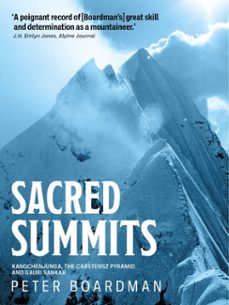
Mountaintops have long been seen as sacred places, home to gods and dreams. In one climbing year Peter Boardman visited three very different sacred mountains. He began on the South Face of the Carstensz Pyramid in New Guinea. This is the highest point between the Andes and the Himalaya, and one of the most inaccessible, rising above thick jungle inhabited by warring Stone Age tribes.During the spring Boardman made a four-man, oxygen-free attempt on the worlds third highest peak, Kangchenjunga. Hurricane-force winds beat back their first two bids on the unclimbed North Ridge, but they eventually stood within feet of the summit leaving the final few yards untrodden in deference to the inhabiting deity. In October, he climbed the mountain most sacred to the Sherpas: the twin-summited Gauri Sankar. Renowned for its technical difficulty and spectacular profile, it is aptly dubbed the Eiger of the Himalaya and Boardmans first ascent took a gruelling twenty-three days.Three sacred mountains, three very different expeditions, all superbly captured by Boardman in Sacred Summits, his second book, first published shortly after his death in 1982. Combining the excitement of extreme climbing with acute observation of life in the mountains, this is an amusing, dramatic, poignant and thought-provoking book.Peter Boardman and Joe Tasker died on Everest in 1982, whilst attempting a new and unclimbed line. Both men were superb mountaineers and talented writers. Their literary legacy lives on through the Boardman Tasker Prize for Mountain Literature, established by family and friends in 1983 and presented annually to the author or co-authors of an original work which has made an outstanding contribution to mountain literature.
Ver más
eBook

Vertebrate Digital 9781906148768
Its a preposterous plan. Still, if you do get up it, I think itll be the hardest thing thats been done in the Himalayas. So spoke Chris Bonington when Peter Boardman and Joe Tasker presented him with their plan to tackle the unclimbed West Wall of Changabang - the Shining Mountain - in 1976. Boningtons was one of the more positive responses; most felt the climb impossibly hard, especially for a two-man, lightweight expedition. This was, after all, perhaps the most fearsome and technically challenging granite wall in the Garhwal Himalaya and an ascent - particularly one in a lightweight style - would be more significant than anything done on Everest at the time. The idea had been Joe Taskers. He had photographed the sheer, shining, white granite sweep of Changabangs West Wall on a previous expedition and asked Pete to return with him the following year. Tasker contributes a second voice throughout Boardmans story, which starts with acclimatisation, sleeping in a Salford frozen food store, and progresses through three nights of hell, marooned in hammocks during a storm, to moments of exultation at the variety and intricacy of the superb, if punishingly difficult, climbing. It is a story of how climbing a mountain can become an all-consuming goal, of the tensions inevitable in forty days of isolation on a two-man expedition; as well as a record of the moment of joy upon reaching the summit ridge against all odds. First published in 1978, The Shining Mountain is Peter Boardmans first book. It is a very personal and honest story that is also amusing, lucidly descriptive, very exciting, and never anything but immensely readable. It was awarded the John Llewelyn Rhys Prize for literature in 1979, winning wide acclaim. His second book, Sacred Summits, was published shortly after his death in 1982. Peter Boardman and Joe Tasker died on Everest in 1982, whilst attempting a new and unclimbed line. Both men were superb mountaineers and talented writers. Their literary legacy lives on through the Boardman Tasker Prize for Mountain Literature, established by family and friends in 1983 and presented annually to the author or co-authors of an original work which has made an outstanding contribution to mountain literature. For more information about the Boardman Tasker Prize, visit: www.boardmantasker.com
Ver más
eBook
Del 1 al 5 de 5