
INGLÉS EPUB sin DRM eBook
A General Introduction to Psychoanalysis | eBook
Por Sigmund Freud
Léelo en cualquier dispositivo Descárgalo y empieza a leer ya
La compra de eBooks para España debe realizarse desde: vivlio.casadellibro.com

App gratuita de lectura Vivlio Casa del Libro
Ahora tu lectura es multidispositivo, con la App Vivlio Casa del Libro, puedes tener todos tus libros en tu tablet y smartphone. Aprovecha cualquier momento para seguir disfrutando de las lecturas que más te gustan.
Sinopsis
Though it has now fallen out of favor among many practitioners and scholars, Freuds concept of psychoanalysis -- an approach that focuses primarily on adverse events in early childhood and irrational drives that are overcome via extended talk therapy -- was and continues to be enormously influential, not only in the realm of psychology, but also in the larger culture. This volume offers a comprehensive overview of psychoanalysis from the point of view of the fields creator. Sigmund Freud (6 May 1856 – 23 September 1939) was an Austrian neurologist and the founder of psychoanalysis, a clinical method for treating psychopathology through dialogue between a patient and a psychoanalyst. Freud was born to Galician Jewish parents in the Moravian town of Freiberg, in the Austrian Empire. He qualified as a doctor of medicine in 1881 at the University of Vienna. Upon completing his habilitation in 1885, he was appointed a docent in neuropathology and became an affiliated professor in 1902. Freud lived and worked in Vienna, having set up his clinical practice there in 1886. In 1938 Freud left Austria to escape the Nazis. He died in exile in the United Kingdom in 1939. In creating psychoanalysis, Freud developed therapeutic techniques such as the use of free association and discovered transference, establishing its central role in the analytic process. Freuds redefinition of sexuality to include its infantile forms led him to formulate the Oedipus complex as the central tenet of psychoanalytical theory. His analysis of dreams as wish-fulfillments provided him with models for the clinical analysis of symptom formation and the underlying mechanisms of repression. On this basis Freud elaborated his theory of the unconscious and went on to develop a model of psychic structure comprising id, ego and super-ego.
Léelo en cualquier dispositivo


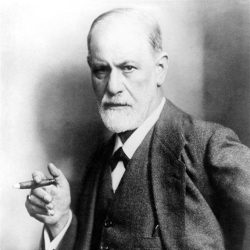
Recibe novedades de Sigmund Freud directamente en tu email
Ficha Técnica
Editorial: Sheba Blake Publishing
ISBN: 9783962178277
Idioma: Inglés
Fecha de lanzamiento: 11/08/2017
Especificaciones del producto
Reseñas sobre A General Introduction to Psychoanalysis
Comparte tu experiencia con la comunidad lectora.
0 Reseñas
5 0
4 0
3 0
2 0
1 0
Sólo por opinar entras en el sorteo mensual de tres tarjetas regalo valoradas en
20€
Publicar una opinión supone haber leído y aceptado las
bases del sorteo
"Tu opinión tiene premio".