El testimonio de la primera mujer del mundo en casarse con un holograma: una artista catalana.Descubre una historia revolucionaria en la que la frontera entre lo humano y lo artificial se difumina. Una union que desafia convenciones y despierta cuestionamientos profundos sobre la identidad, la intimidad y el significado del compromiso. Un libro que cuestiona los modelos de pareja y reflexiona sobre la soledad, la etica en la IA y la compañia como el nuevo oro del siglo XXII
In volume 1, Professor Verdon sought to identify what crippled social anthropologys original project, that of understanding sociocultural variability. He found its cause in a universal, Aristotelian cosmology that renders groups ontologically variable to their principles of social organization, by defining them in terms of behaviour regulation. In this second volume, he develops a cure to that cosmological malaise: to define groups outside all behaviour regulation, and to define a separate group for every type of activity (unifunctional groups). From these two new cosmological requirements he sets out to define all the main concepts of social anthropology in what he calls an operational language (defined with respect to anthropologys aims, not as entities with intrinsic anthropological attributes): groups, corporations, descent, territoriality, lineages, segmentation, sovereignty and so on.He then applies this language to translate classical ethnographies operationally. He first chose the most famous ethnographies of so-called segmentary lineage societies, the Nuer (Sudan), Tallensi (Ghana) and Tiv (Nigeria), and then added the Berbers from the Rif (Morocco), the Yao (Malawi) and Australian Aborigines. All those societies were described as having descent groups. Translated operationally, ONLY ONE of them retains descent groups (the Tallensi). This leads him radically to transform the ethnographic landscape of social anthropology. Where all ethnographers saw descent groups almost everywhere, he finds them to be rare occurrences, now replaced with clientelistic social formations.Overall, setting out to define a set of etic (objective) concepts, he discovers that this language actually yields much better emic approaches to social organization (an approach closer to the actors subjective experience).
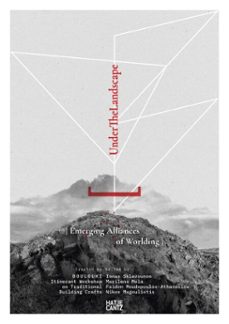
Building on the premise that landscapes provide a common ground where different kinds of knowledge may come together, this edited volume draws on a wide range of disciplines, including geology and geography, cultural anthropology and philosophy, architecture and art history. It suggests that the complex social and environmental crises of the 21st century cannot be understood independently of a historically constituted aesthetic approach to landscapes.Boulouki is a collective that deals with the traditional knowledge of building. Under the Landscape (Santorini and Therasia, 2021 2022), one of the collectives most important projects, comprised a participatory restoration, research into local materials, an exhibition and a symposium, and is the basis and starting point of this publication.
The monograph Forest Overgrowth and Unfolding Hope examines the transformation of the cultural landscape of the Natisone Valleys. This remote border region has undergone significant change from the second half of the twentieth century to the present day. What was once a predominantly agrarian society has been radically reshaped; formerly densely populated villages have emptied, and cultivated land has gradually been overtaken by forest.The monograph sheds light both on local understandings of these transformations and on the reasons behind them. To this end, it analyses the social memories of residents especially of the generation that was directly involved in these processes, observed them, experienced them, and made sense of them. It also offers a detailed account of past and present practices of care for four key landscape elements: meadows, chestnut trees, drystone terraces, and paths. While these elements were once essential for peoples survival, today they are acquiring new meanings. For some inhabitants, their overgrowth symbolizes the inevitable decline of the area; for others, it represents an opportunity to revitalize these places, inspiring hope for a better future for the Natisone Valleys.