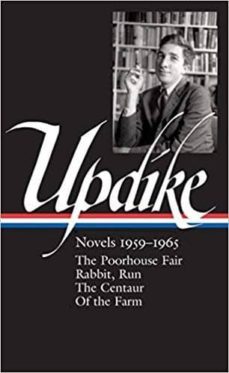
Library of America launches its definitive multi-volume edition of John Updike''s novels with the four early works that signaled the arrival of one of the most gifted young novelists of the 1960s.John Updike had already made a name as a contributor of stories and poems to The New Yorker when, in January 1959, at the age of twenty-six, he published his first novel, The Poorhouse Fair, launching one of the most extraordinary literary careers in American letters. Now, Library of America inaugurates a multi-volume edition of Updike''s novels with this volume gathering his first four novels, including the landmark Rabbit, Run, chosen in 2010 by TIME Magazine one of the best 100 novels published in English since 1923. Set in the near future of 1978, The Poorhouse Fair stages a conflict between John Hook, a rebellious ninety-four-year-old former schoolteacher now a resident of a rural poorhouse, and young Mr. Conner, the utilitarian humanist who runs the facility, as an allegory of resistance in a world of systems and efficiencies. Updike''s legendary rejoinder to Jack Kerouac''s On the Road, Rabbit, Run (1960) introduces us to the author''s most enduring protagonist, Harry "Rabbit" Angstrom, a onetime high-school basketball star who, on an impulse, deserts his wife and son, with tragic consequences. The Centaur, a comic-tragic father-son novel that mixes memory and myth, won the National Book Award for Fiction in 1964. The novella Of the Farm (1965) is one of Updike''s loveliest performances, a kind of chamber music for four voices set during a single memorable weekend.
Sally is blonde, expensively dressed and married to Richard. He is the generous husband, making the kind of drunken compromise a man has to make when he is married to a desirable woman. Jerry met his wife Ruth at art school and for all their married lives, Jerry and Sally have been lovers.
"Rabbit" Angstrom, failed hero of "Rabbit Run", is back. He has changed, somewhat for the worse. His marriage is collapsing, his job is becoming redundant and outside pressures disturb his peace of mind; but in the end, he achieves a kind of peace, the peace of exhaustion, perhaps.