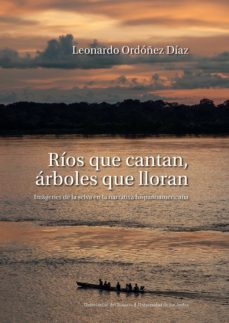
Los textos literarios se presentan como una ventana para explorar la dimensión ambiental de la condición humana; por ello, orientado a explorar varios temas clave del canon de las narrativas de la selva, este libro estudia sus imagenes y representaciones en novelas y cuentos hispanoamericanos del lapso 1905-2015, cuya accion se situa en la Amazonia entorno selvatico latinoamericano por excelencia, pero tambien en la cuenca del Parana, los bosques humedos de America Central y otros entornos relevantes. Si bien la metodologia privilegio las herramientas de la ecocritica, la ecologia politica y la etica ambiental, se apoya igualmente en desarrollos recientes de la filosofia ecologica, la biogeografia de la selva tropical, la historia ambiental y la antropologia cultural. Asi, mediante este acercamiento pluridisciplinar, Rios que cantan, arboles que lloran abre un escenario de dialogo fecundo entre la critica literaria y otras areas de las ciencias naturales, sociales y humanas, para proveer ideas y puntos de vista que contribuyen a la construccion de una relacion distinta, simbiotica y no simplemente extractiva, entre las sociedades humanas y los ecosistemas naturales.Palabras clave: narrativas hispanoamericanas de la selva, ecologia politica, etica ambiental, selva amazonica, bosques tropicales humedos, historia ambiental de la Amazonia, antropologia amazonica.Rivers that sing, trees that cry. Images of the jungle in Spanish-American narrativesAbstractLiterary texts are a window to explore the environmental dimension of the human condition. For this reason, seeking to explore key themes in the canon of jungle narratives, this book studies the images and representations of the jungle in Latin American novels and stories from 1905-2015, where the action takes place in the AmazonLatin American jungle environment par excellence, as well as in the Parana basin, the humid forests of Central America, and other relevant environments. While the preferred methodology consists of tools provided by ecocriticism, political ecology, and environmental ethics, the research also draws on recent developments in ecological philosophy, rainforest biogeography, environmental history, and cultural anthropology. Thus, using this multidisciplinary approach, Rivers that sing, trees that cry opens a fruitful dialogue between literary criticism and other areas of natural, social, and human sciences, by providing ideas and points of view that contribute to the construction of a different, symbioticand not simply extractiverelationship between human societies and natural ecosystems.Keywords: Hispano-American narratives of the jungle, political ecology, environmental ethics, Amazon rainforest, humid tropical forests, environmental history of the Amazon, Amazonian anthropology.
Ver más