














In this series of dialogues, Derrida discusses and elaborates on some of the central themes of his work, such as the problems of genesis, justice, authorship and death. Combining autobiographical reflection with philosophical enquiry, Derrida illuminates the ideas that have characterized his thought from its beginning to the present day. If there is one single feature that links these contributions, it is the theme of singularity - that is, the uniqueness of the individual, the resistance of existence to philosophy, the temporality of the singular and exceptional moment, and the problem of exemplarity. The second half of this book contains an essay by Maurizio Ferraris in which he explores the questions of indication, time and the inscription of the transcendental in the empirical. The essay is developed in close proximity to Derrida and in dialogue with figures such as Plato, Aristotle, Plotinus, Kant, Hegel and Heidegger. It thereby provides at once a useful introduction to the philosophy of one of Italy''s most prominent philosophers and complements Derrida''s own ideas. ''A Taste for the Secret'' consists of material that has never before appeared in English. It will be of great interest to second year university graduates and above, graduate students and academics in modern languages, literature, literary theory, philosophy and the humanities generally.
Ficha técnica
Editorial: Polity Press
ISBN: 9780745623344
Idioma: Inglés
Número de páginas: 176
Tiempo de lectura:
3h 34m
Encuadernación: Tapa blanda
Año de edición: 2001
Plaza de edición: Oxford
Alto: 23.0 cm
Ancho: 16.0 cm
Especificaciones del producto
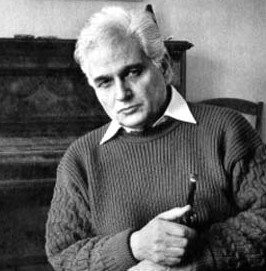
Escrito por Jacques Derrida y Maurizio Ferraris
Nacido en El-Biar (Argelia) en 1930, permanece como uno de los pensadores mayores de la escena filosófica, señalada por la estrategia de la deconstrucción ligada a su nombre. Fue director de estudios de la École des Hautes Études en Sciences Sociales de París, donde impartió seminarios hasta su fallecimiento en 2004, además de profesor visitante en diversas universidades norteamericanas. En una entrevista concedida pocos meses antes de su muerte, Derrida se despedía con estas palabras: «Somos estructuralmente supervivientes, estamos marcados por esta estructura de la huella, del testamento. Pero [ ] la deconstrucción está siempre del lado del sí, de la afirmación de la vida».
Maurizio Ferraris enseña Filosofía teorética en la Universidad de Turín, donde dirige el Centro Interuniversitario de Ontología Teórica y Aplicada (Ctao). Ha publicado una treintena de libros, entre otros: Nietzsche e la filosofia del Novecento, Mimica, Lutto e autobiografía da Agostino a Heidegger, Il mondo esterno, Goodbye Kant! (Losada), Historia de la hermenéutica (Akal).